Riyadh is a city of roughly seven to eight million people on a plateau about 600 metres above sea level, in the centre of the Arabian Peninsula. It is the political and business capital of Saudi Arabia, the homeland of the ruling family and the most conservative of the kingdom’s big cities — and also the one changing fastest. First-time visitors usually find it more welcoming, and far easier, than they expected.
Riyadh at a glance
| Topic | What to know |
|---|---|
| Language | Arabic. English is widely spoken in hotels, restaurants, malls and by ride-hailing apps. |
| Currency | Saudi riyal (SAR), pegged at 3.75 to the US dollar. Cards and phone payments are accepted almost everywhere. |
| Weekend | Friday and Saturday. Friday mornings are very quiet; the city wakes up after the midday prayer. |
| Time zone | UTC+3 all year. No daylight saving. |
| Electricity | 230 V, with British-style three-pin sockets (type G) the norm. |
| Alcohol | Prohibited. Do not bring any into the country. |
| Emergency number | 911 in Riyadh. |
| Best months | November to March. |
 Diriyah & old Riyadh
Diriyah & At-Turaif
The mud-brick birthplace of the Saudi state
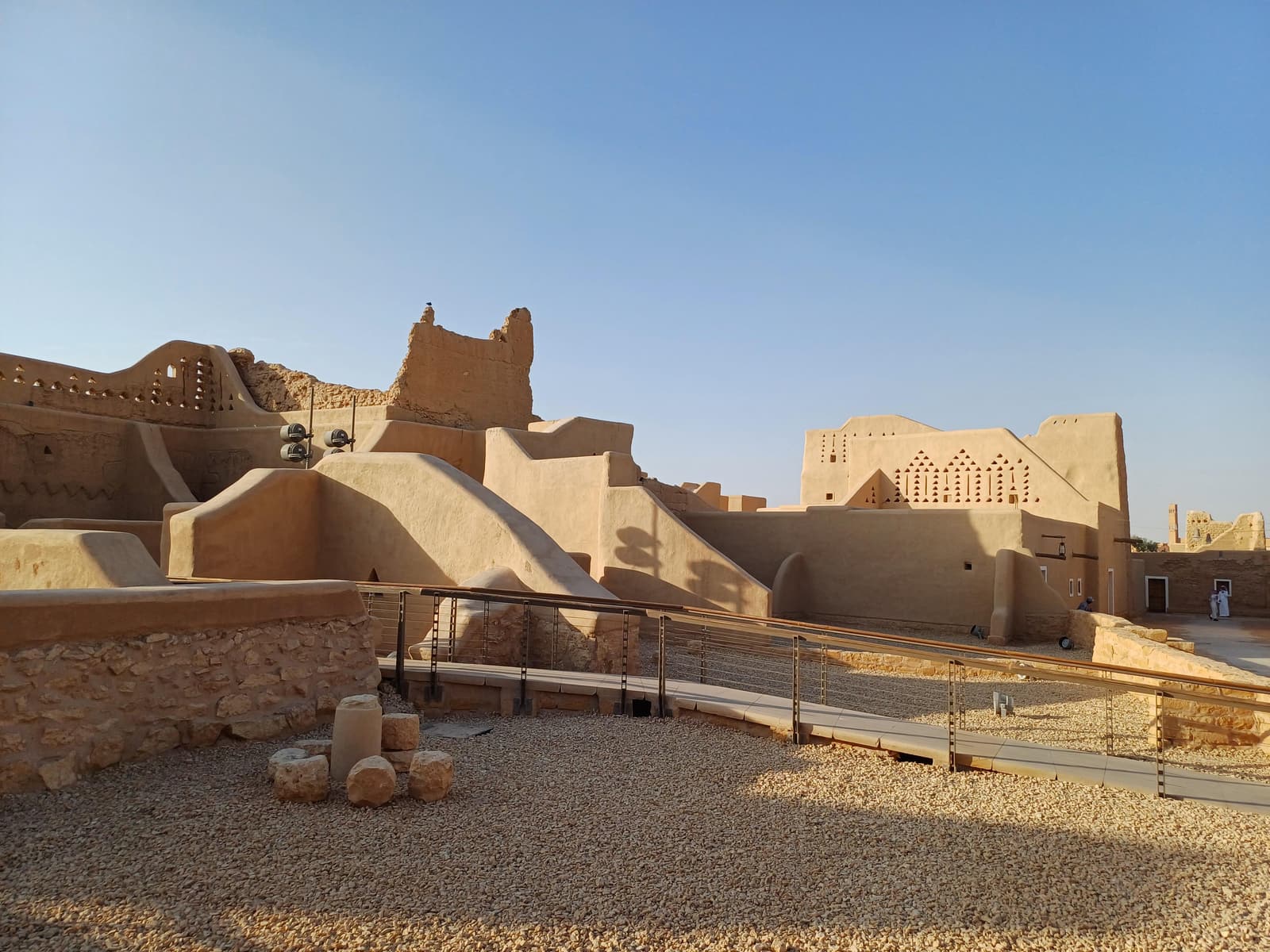
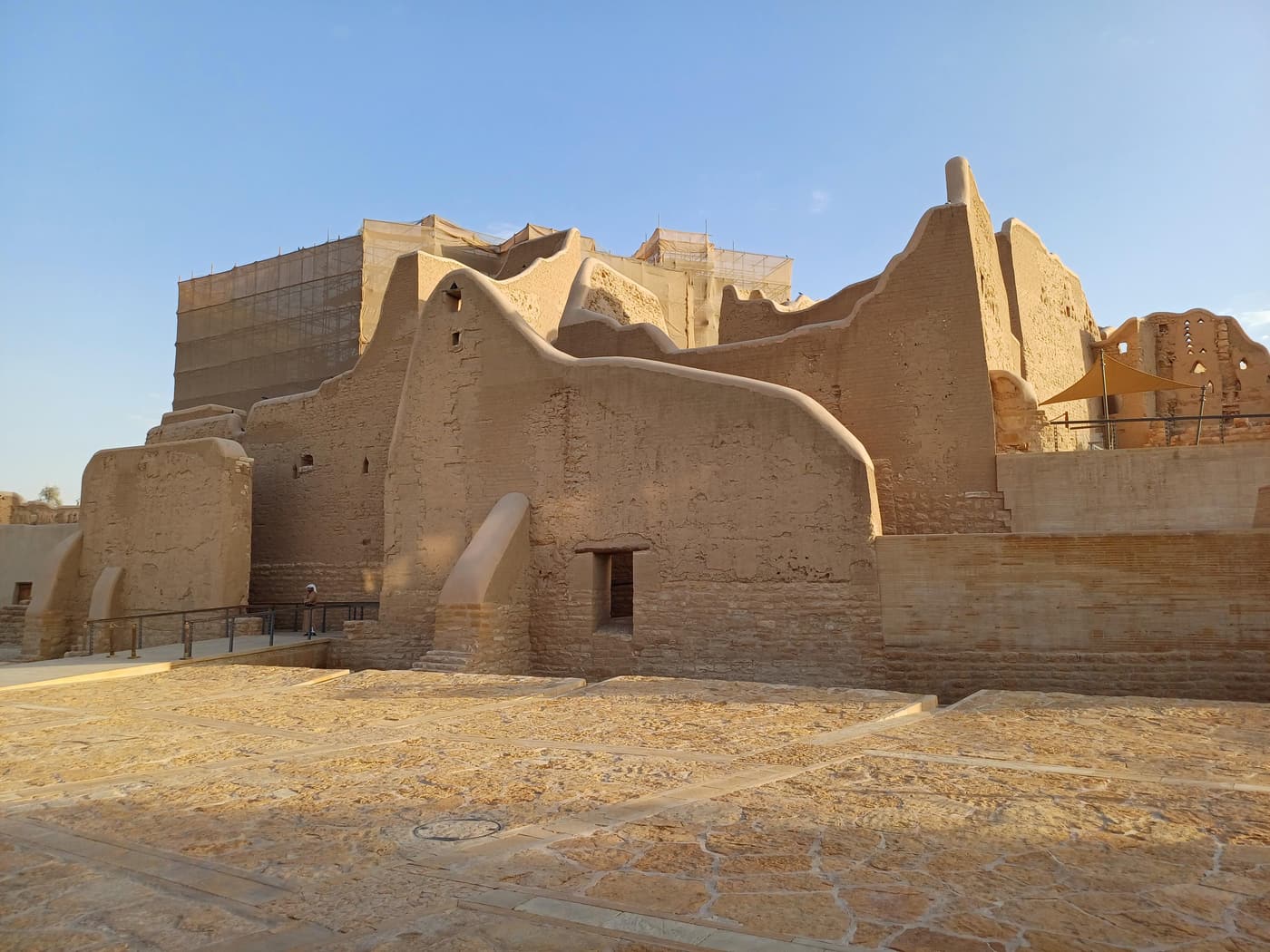
On the edge of Wadi Hanifah, a short drive from the centre, Diriyah was the first capital of the Al Saud. Its At-Turaif district — a UNESCO World Heritage Site of mud-brick palaces — has been restored as an open-air museum, with the restaurants of Bujairi Terrace facing it across the wadi.
 Diriyah & old Riyadh
Masmak Fortress
Where the story of modern Saudi Arabia begins
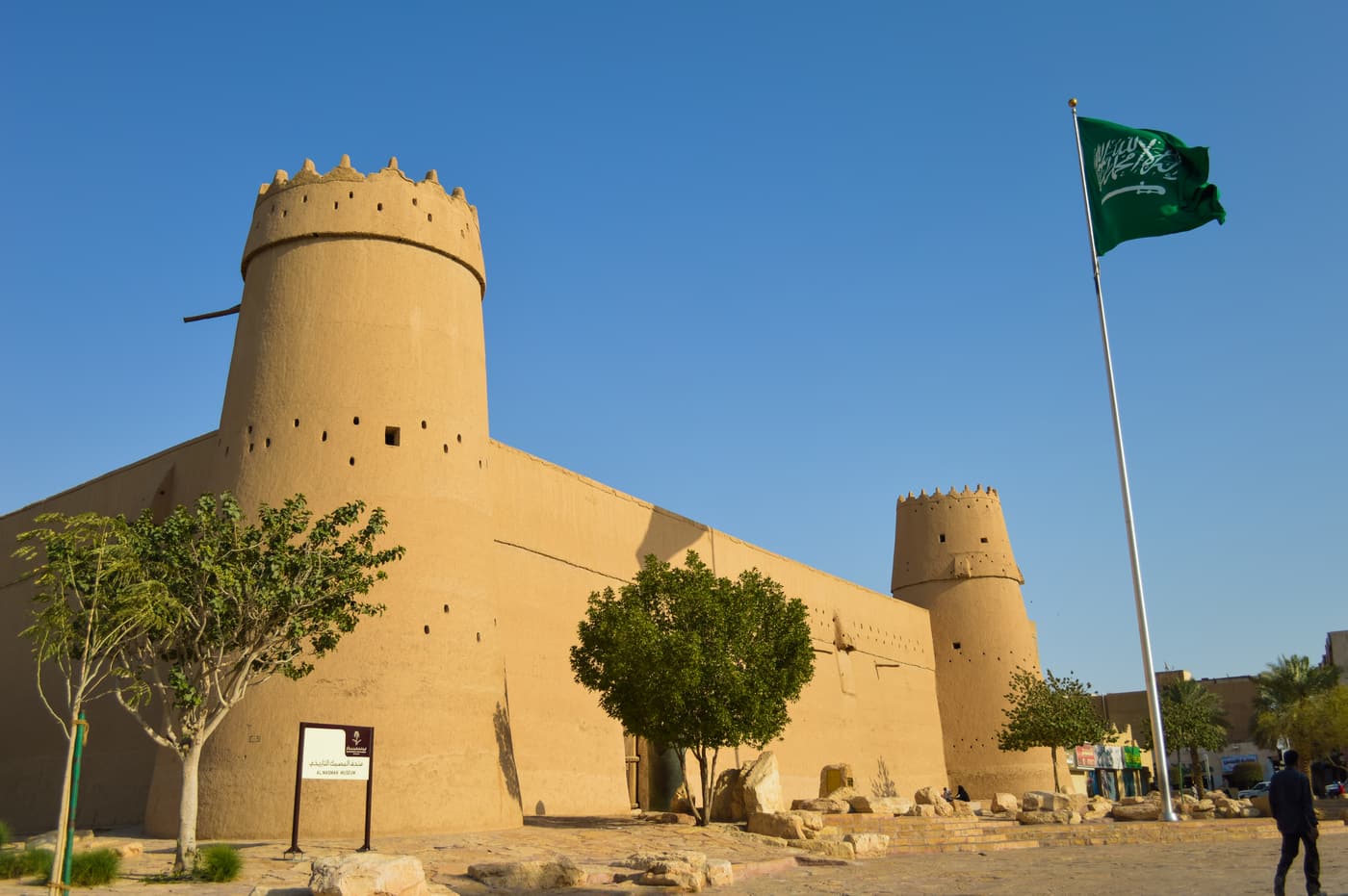
A squat clay-and-mud-brick fort in the middle of old Riyadh, with four round towers and a thick palm-wood gate. In 1902 the young Abdulaziz Ibn Saud stormed it and retook the town — the first step towards the kingdom. Today it is a small museum.
 Diriyah & old Riyadh
National Museum & Murabba Palace
Arabia’s story, from meteorites to the modern kingdom
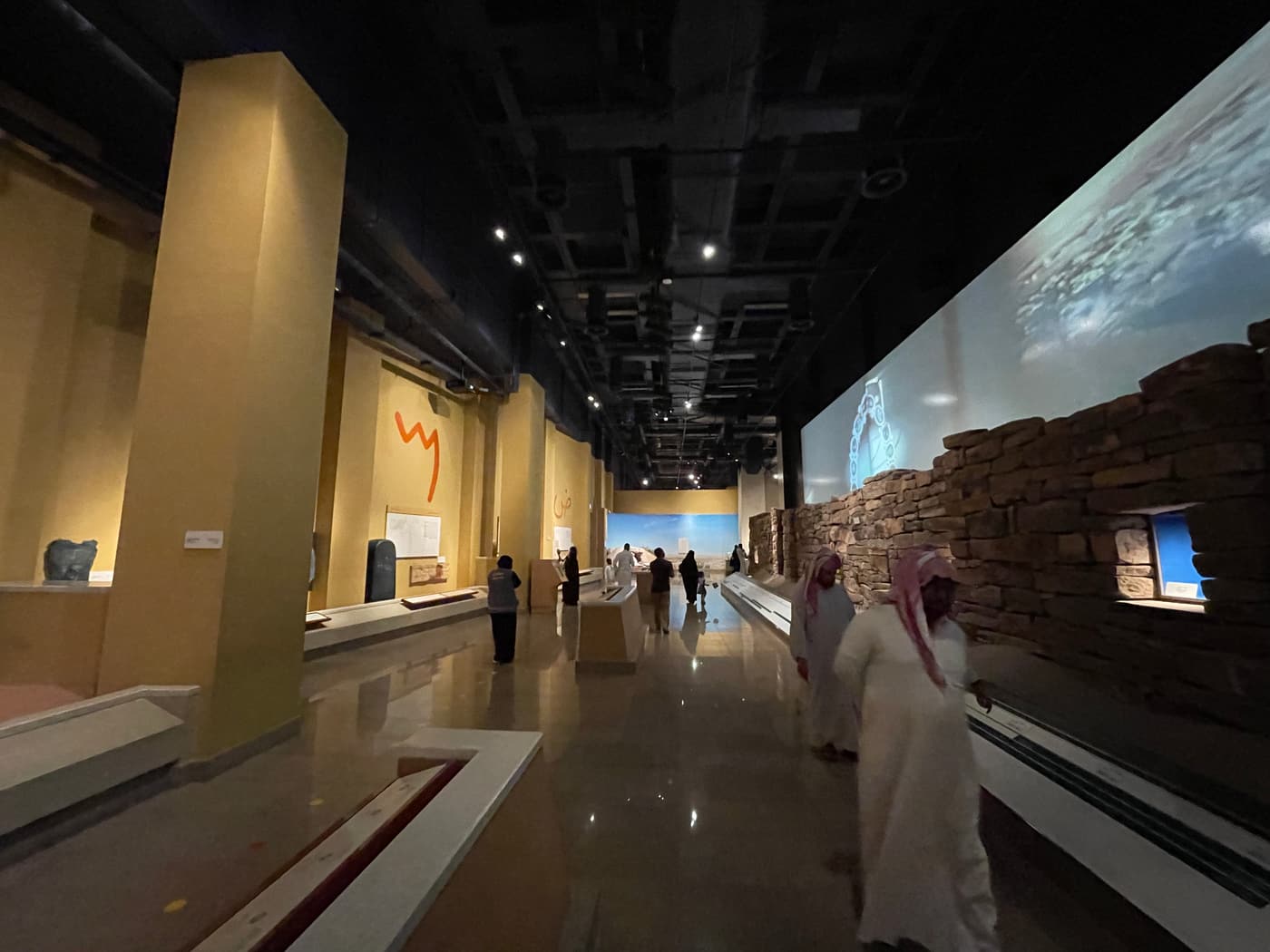
The National Museum of Saudi Arabia is the best museum in the country and the one indoor sight in Riyadh that nobody should skip. It stands in the gardens of the King Abdulaziz Historical Centre, beside Murabba Palace, the mud-brick residence King Abdulaziz built outside the old walls in the 1930s.
 Modern Riyadh
Kingdom Centre & Sky Bridge
The view from the top of Olaya
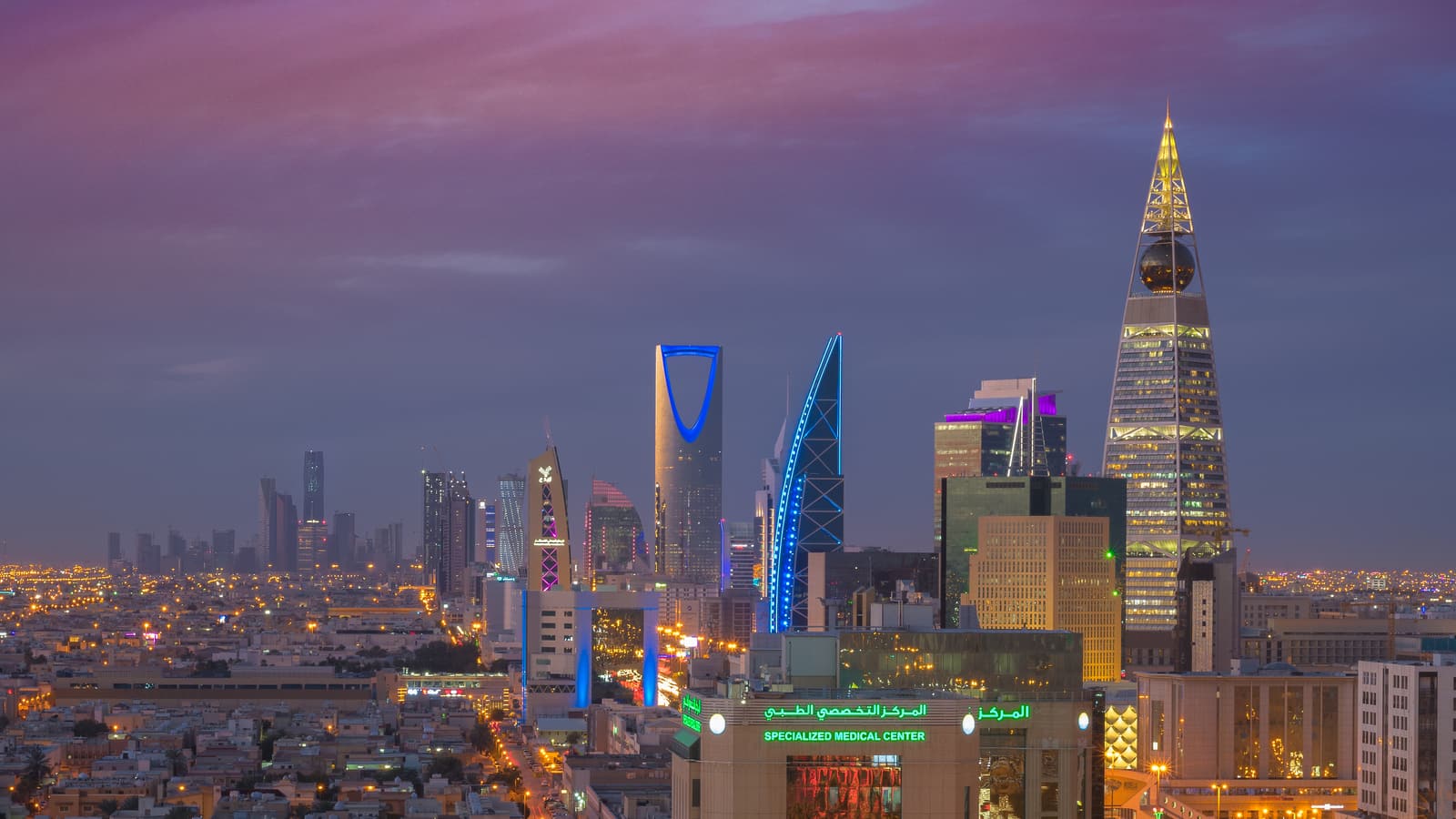
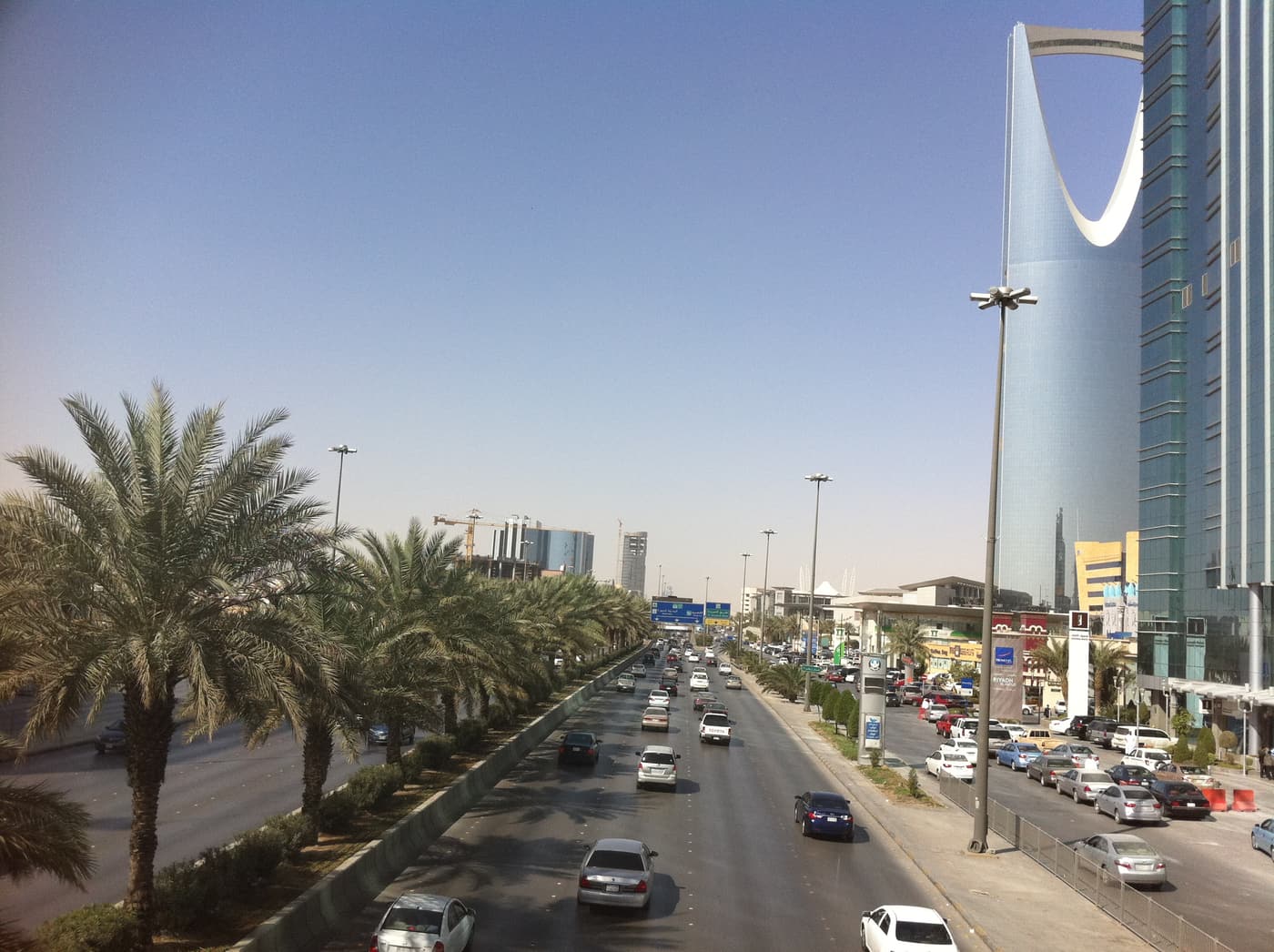
The tower with the hole in it is Riyadh’s emblem. A steel sky bridge spans the gap at the top, roughly 300 metres above Olaya, with views over the whole grid of the city. Nearby stands Al Faisaliah, the pointed tower with a golden globe near its tip.
Dress and etiquette
The rules for visitors were relaxed in 2019. Foreign women are no longer required to wear an abaya (the long, loose robe) or to cover their hair. What is asked of everyone, men and women, is modesty in public.
- Women: loose clothing that covers the shoulders, upper arms and knees — long skirts or trousers with a loose top are fine. Many visitors still choose to wear a light abaya over their clothes in the old town and in traditional areas because it is comfortable and blends in. Carry a scarf: you will need to cover your hair inside a mosque.
- Men: long trousers and a shirt with sleeves in the city. Shorts are acceptable for sport and in the desert but look out of place in restaurants, malls and museums.
- Everyone: avoid tight or transparent clothing and slogans or images that could offend.
- Greetings: between men, a handshake. Between men and women, wait to see whether a hand is offered; a hand on the heart and a smile is a polite alternative.
- Public behaviour: avoid displays of affection in public, loud music and swearing. Public-decency rules exist and fines can be issued.
- Photography: do not photograph people, especially women, without asking. Avoid government buildings, palaces and military sites.
- Hospitality: if you are offered coffee and dates, accept with your right hand. It is the national welcome.
Prayer times, the weekend and opening hours
The call to prayer sounds five times a day. Shops and restaurants used to shut for each prayer; that requirement has been eased in recent years and most now stay open, though some smaller shops — especially in the souqs — still pause for twenty minutes or so. A prayer-times app is useful all the same.
More important for planning is the daily rhythm. Riyadh is a late city. Many museums and attractions open in the morning, close or go quiet in the early afternoon and are busiest in the evening; malls and restaurants stay open until late at night, and later still at weekends. On Fridays most places open only in the afternoon. Always check hours for the specific day.
Alcohol and other rules
Alcohol is prohibited in Saudi Arabia and is not sold in hotels, restaurants or shops open to the public. Do not bring it with you, duty-free included. Restaurants make a virtue of the rule with inventive mocktails, fresh juices and non-alcoholic beers. Drug offences carry extremely severe penalties. E-cigarettes and smoking are restricted in many indoor public places.
Ramadan
During the holy month, Muslims fast from dawn to sunset. Visitors are not expected to fast but should not eat, drink or smoke in public during daylight hours. Most restaurants are closed by day (hotels arrange meals for guests), working hours are shortened and many sights keep reduced times. After sunset the city comes alive: iftar buffets, night markets and shops open into the small hours. It is a memorable time to visit if you are flexible, and a frustrating one if you are on a tight schedule. Ramadan moves about eleven days earlier each year — see when to visit.
Women travellers
Women can travel to and around Riyadh independently: book hotels, take taxis and ride-hailing cars, hire and drive cars, and eat alone in restaurants. The separate “family” and “singles” sections that restaurants once had have largely gone, though the metro keeps family carriages that women travelling alone are welcome to use. Street harassment is uncommon by the standards of most large cities, and penalties for it are heavy. The practical advice is the same as for anyone: dress modestly, use app-based cars at night and expect some curious but usually friendly attention in less touristed places.
Foreign couples are not asked for proof of marriage when checking in to hotels.
Money and costs
- Contactless cards and phone wallets work nearly everywhere, including the metro. Keep a little cash for souq purchases and tips.
- ATMs are plentiful. Exchange offices in malls usually beat hotel rates.
- Riyadh is not a cheap city. International hotels and fashionable restaurants cost about what they would in a major European capital, and prices rise sharply during Riyadh Season and big conferences. Local restaurants, the metro, fuel and taxis are good value.
- VAT is included in displayed prices. Tipping is appreciated rather than expected: round up taxi fares and leave around ten per cent in restaurants if no service charge has been added.
Food and coffee
Najdi cooking is the food of the desert interior: generous, mildly spiced and built for sharing.
- Kabsa: the national dish — long-grain rice cooked in a spiced broth with chicken, lamb or camel, served on a big platter.
- Jareesh: crushed wheat simmered slowly with yoghurt or stock until creamy, topped with fried onions. A Najdi speciality.
- Qursan and margoog: thin sheets of bread or dough layered or stewed with vegetables and meat broth.
- Mutabbaq, foul and tamees: stuffed pan-fried pastry, stewed fava beans and flatbread — the classic cheap breakfast.
- Dates: served with everything, in dozens of varieties. Date shops will let you taste before you buy.
Najd Village is the best-known place to try traditional dishes in a traditional setting, with floor seating in mud-brick-style rooms; there are several branches. For modern Saudi and international dining, head for Bujairi Terrace in Diriyah, KAFD, Via Riyadh, The Zone and the restaurant strip of Tahlia Street in Olaya.
Coffee is a serious matter. Traditional Saudi coffee (gahwa) is pale, lightly roasted and scented with cardamom and sometimes saffron, poured from a long-spouted dallah into tiny cups and always served with dates. Your cup will be refilled until you give it a little shake to show you have had enough. Alongside the old tradition, Riyadh has one of the liveliest speciality coffee scenes anywhere, with independent roasters and design-conscious cafés in every district — the city’s real social life happens in them.
Health, safety and connectivity
- Riyadh is a safe city with very low rates of street crime. The main risks for visitors are road traffic and the heat.
- Drink plenty of water. Tap water is treated, but most people drink bottled.
- Private hospitals and pharmacies are of a high standard. The tourist visa includes basic medical insurance; proper travel insurance is still wise.
- Dust storms occur, mostly in spring. Travellers with asthma should carry their medication.
- Buy a local SIM or eSIM at the airport from STC, Mobily or Zain — you will need your passport. Coverage in the city is excellent, and 5G is widespread. Coverage in the desert is patchy.
- Useful apps: Uber and Careem, Darb for the metro and buses, a maps app with offline areas downloaded, and the official ticketing apps for Riyadh Season and Diriyah.
A three-day itinerary
Day one — old Riyadh. Start late morning at the National Museum and Murabba Palace, air-conditioned and absorbing for two or three hours. Lunch nearby, rest through the heat, then take the metro to Qasr Al Hokm for Masmak Fortress, Deira Square and Souq Al Zal as the lanes fill up. Dinner at a Najdi restaurant.
Day two — the modern city and Diriyah. Coffee in Olaya and a look at Kingdom Centre and Al Faisaliah, or ride the Blue Line to KAFD for the architecture. Mid-afternoon, take a car to Diriyah: At-Turaif in the golden hour, dinner on Bujairi Terrace with the walls lit up opposite.
Day three — the desert. A slow morning, then an early-afternoon pickup for the Edge of the World, returning around nine or ten at night. Prefer something shorter? Take a half-day safari to the Red Sand Dunes and spend the evening on the Sky Bridge or — in season — at Boulevard City.
With more time, add a day trip to Ushaiqer, a day at Qiddiya, a sunset walk in Wadi Hanifah and the Diplomatic Quarter, or an art afternoon at JAX.
What to pack
- Loose, long, breathable clothes; a light scarf.
- A warm layer from November to March — desert nights can drop to single figures.
- Closed shoes with grip for the desert.
- Sunglasses, a hat and high-factor sunscreen.
- A type G plug adaptor and a power bank.