Riyadh’s sights fall into three groups. The heritage sites — Diriyah, Masmak Fortress, the National Museum and the old souqs — tell the story of how a small oasis town became the capital of a kingdom. The modern city shows where it is heading: towers, a futuristic financial district, festival grounds and a restored green valley. And the desert begins at the edge of town, with cliffs, dunes, caves and old villages within a half-day or day’s reach. Each place below has its own guide covering what to do, how to get there and which tours cover it.
Things to See in & Around Riyadh
Thirteen places that explain the city — its mud-brick past, its glass present and the desert all around.
Diriyah & old Riyadh
 Diriyah & old Riyadh
Diriyah & At-Turaif
The mud-brick birthplace of the Saudi state
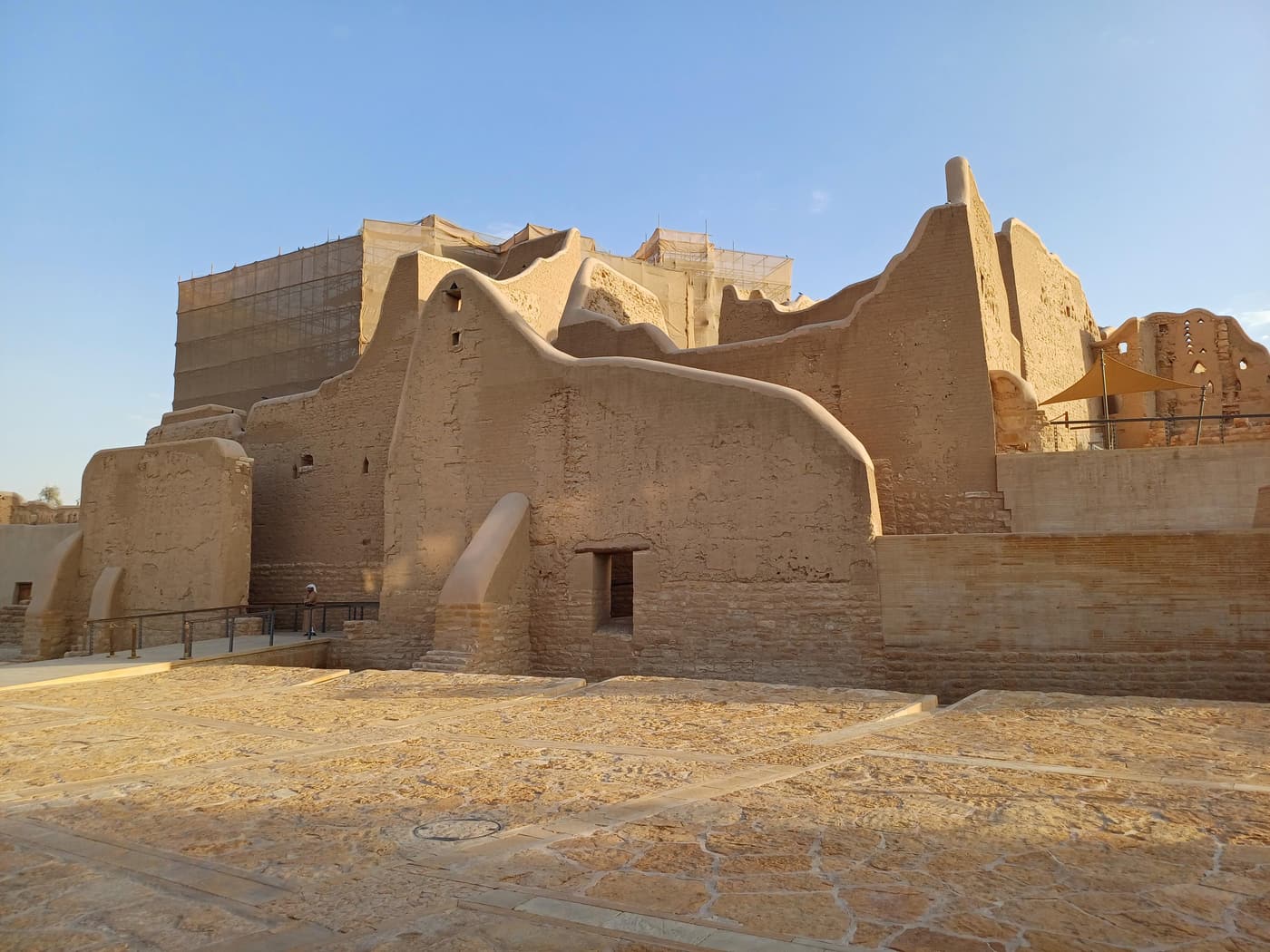
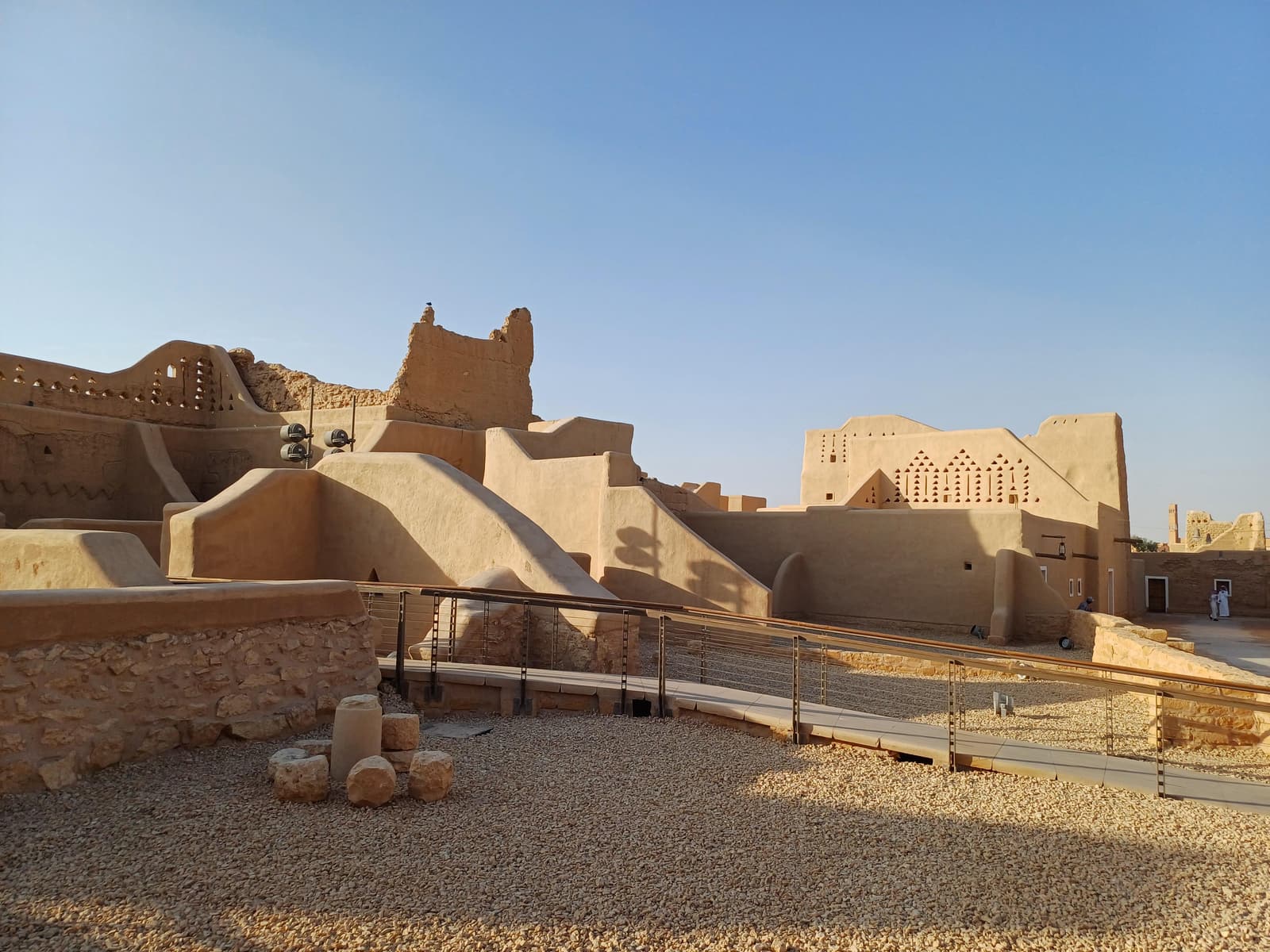
On the edge of Wadi Hanifah, a short drive from the centre, Diriyah was the first capital of the Al Saud. Its At-Turaif district — a UNESCO World Heritage Site of mud-brick palaces — has been restored as an open-air museum, with the restaurants of Bujairi Terrace facing it across the wadi.
 Diriyah & old Riyadh
Masmak Fortress
Where the story of modern Saudi Arabia begins
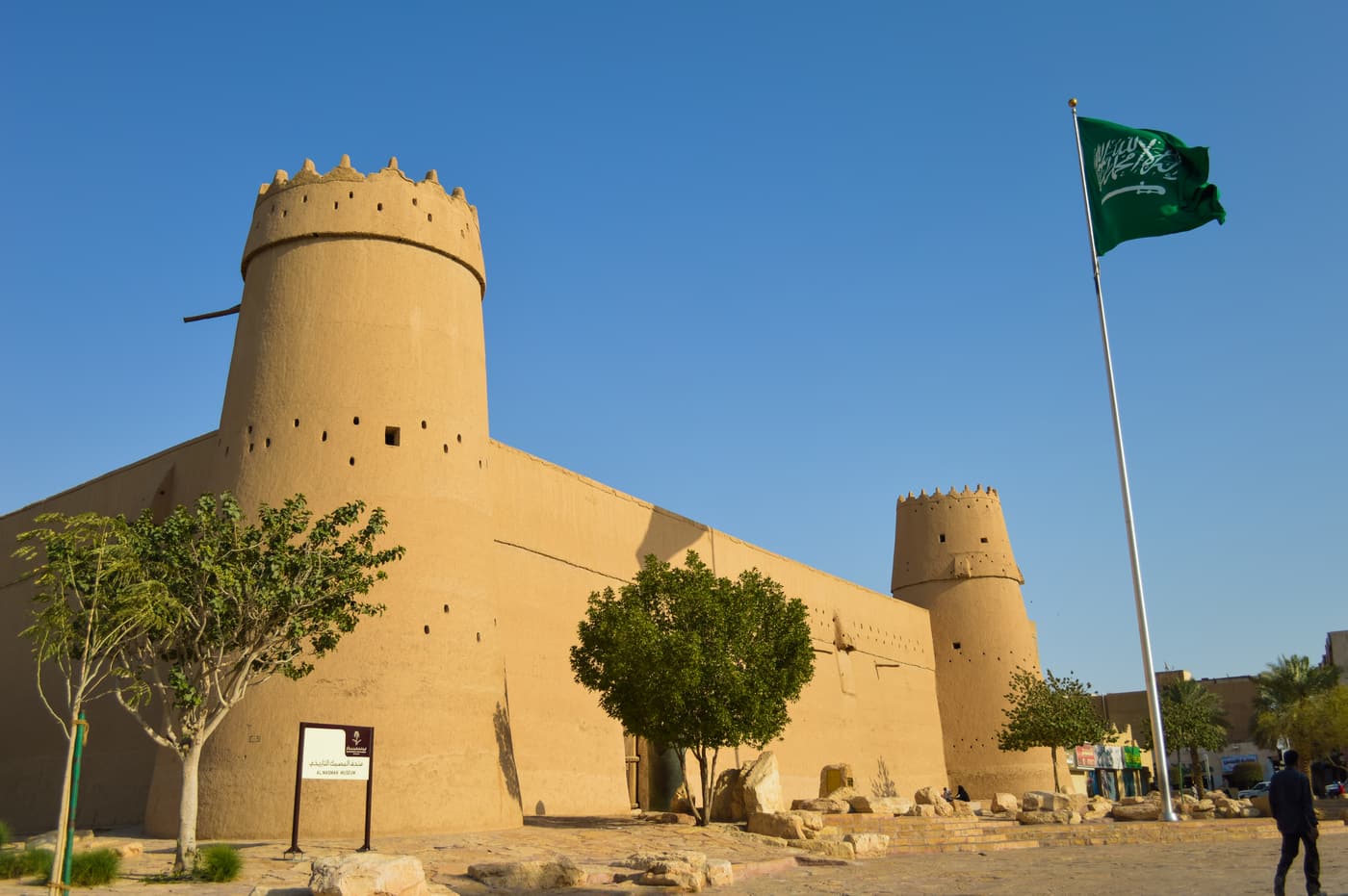
A squat clay-and-mud-brick fort in the middle of old Riyadh, with four round towers and a thick palm-wood gate. In 1902 the young Abdulaziz Ibn Saud stormed it and retook the town — the first step towards the kingdom. Today it is a small museum.
 Diriyah & old Riyadh
National Museum & Murabba Palace
Arabia’s story, from meteorites to the modern kingdom
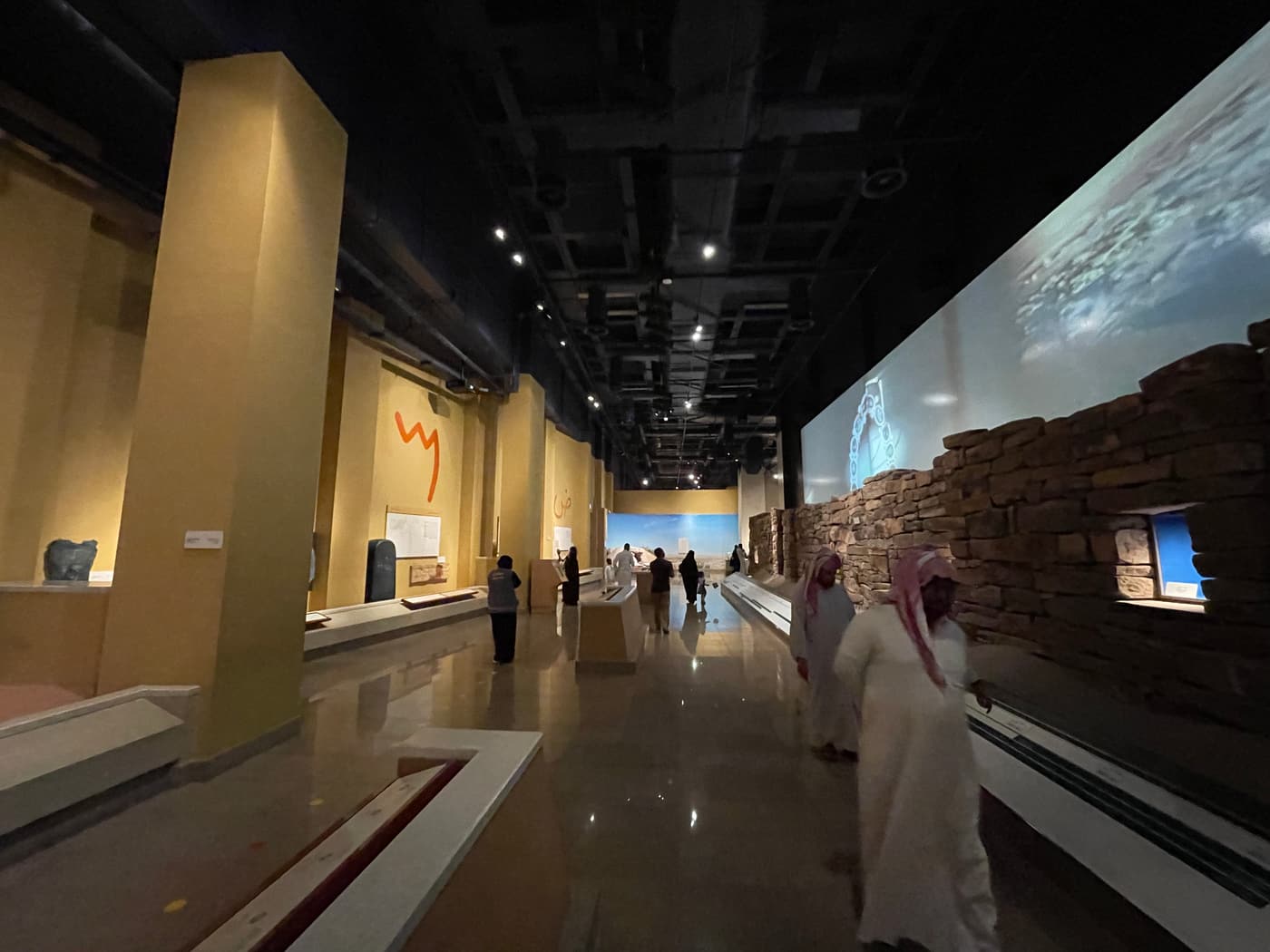
The National Museum of Saudi Arabia is the best museum in the country and the one indoor sight in Riyadh that nobody should skip. It stands in the gardens of the King Abdulaziz Historical Centre, beside Murabba Palace, the mud-brick residence King Abdulaziz built outside the old walls in the 1930s.
 Diriyah & old Riyadh
Souq Al Zal & Deira
Carpets, incense and old Riyadh after dark
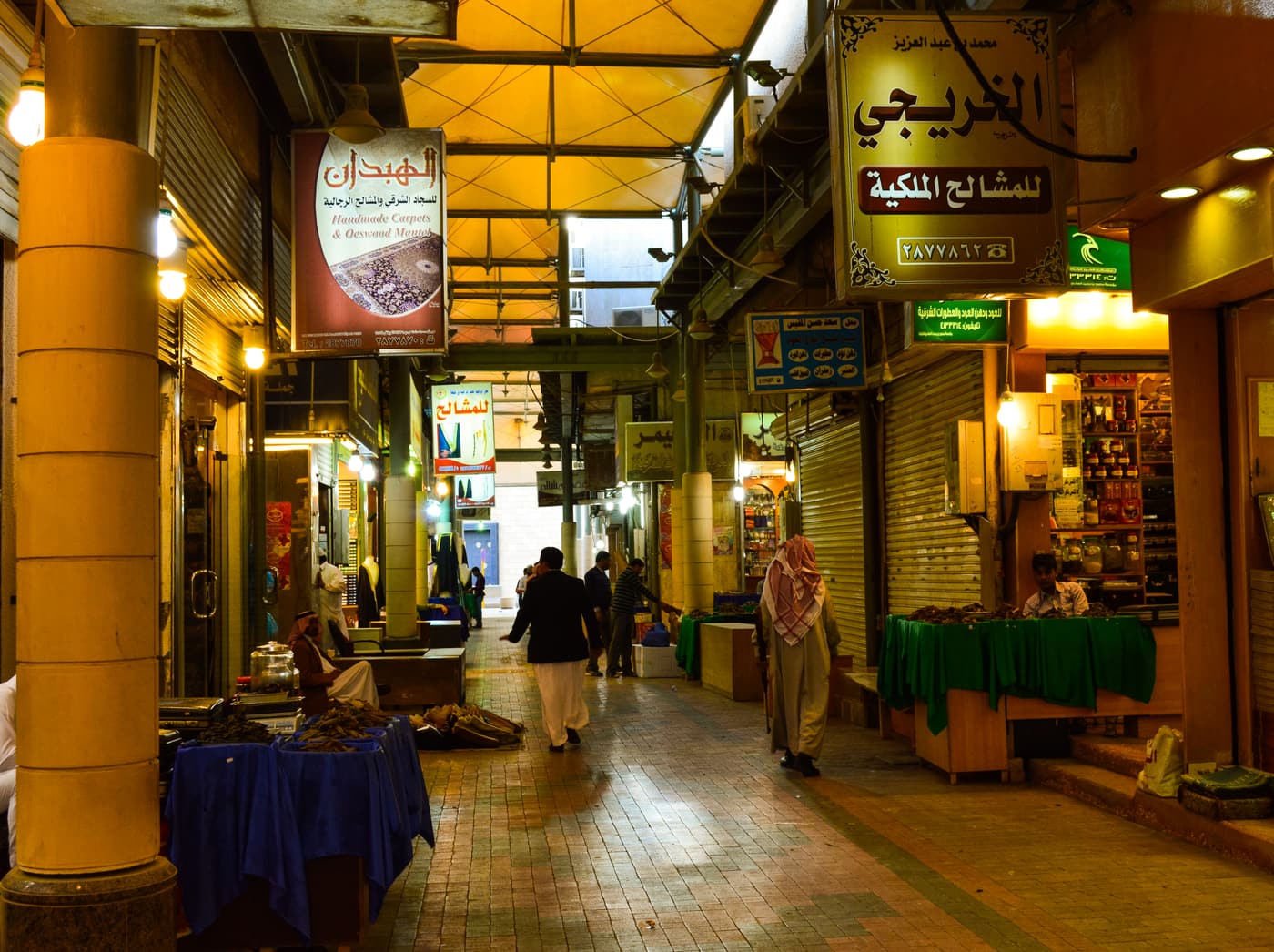
Riyadh’s most atmospheric traditional market fills the lanes south of Masmak Fortress: carpets, oud and incense, bishts, daggers, coffee pots and antiques. Around it lies Deira, the historic heart of the city, with its broad square and grand mosque.
Modern Riyadh
 Modern Riyadh
Kingdom Centre & Sky Bridge
The view from the top of Olaya
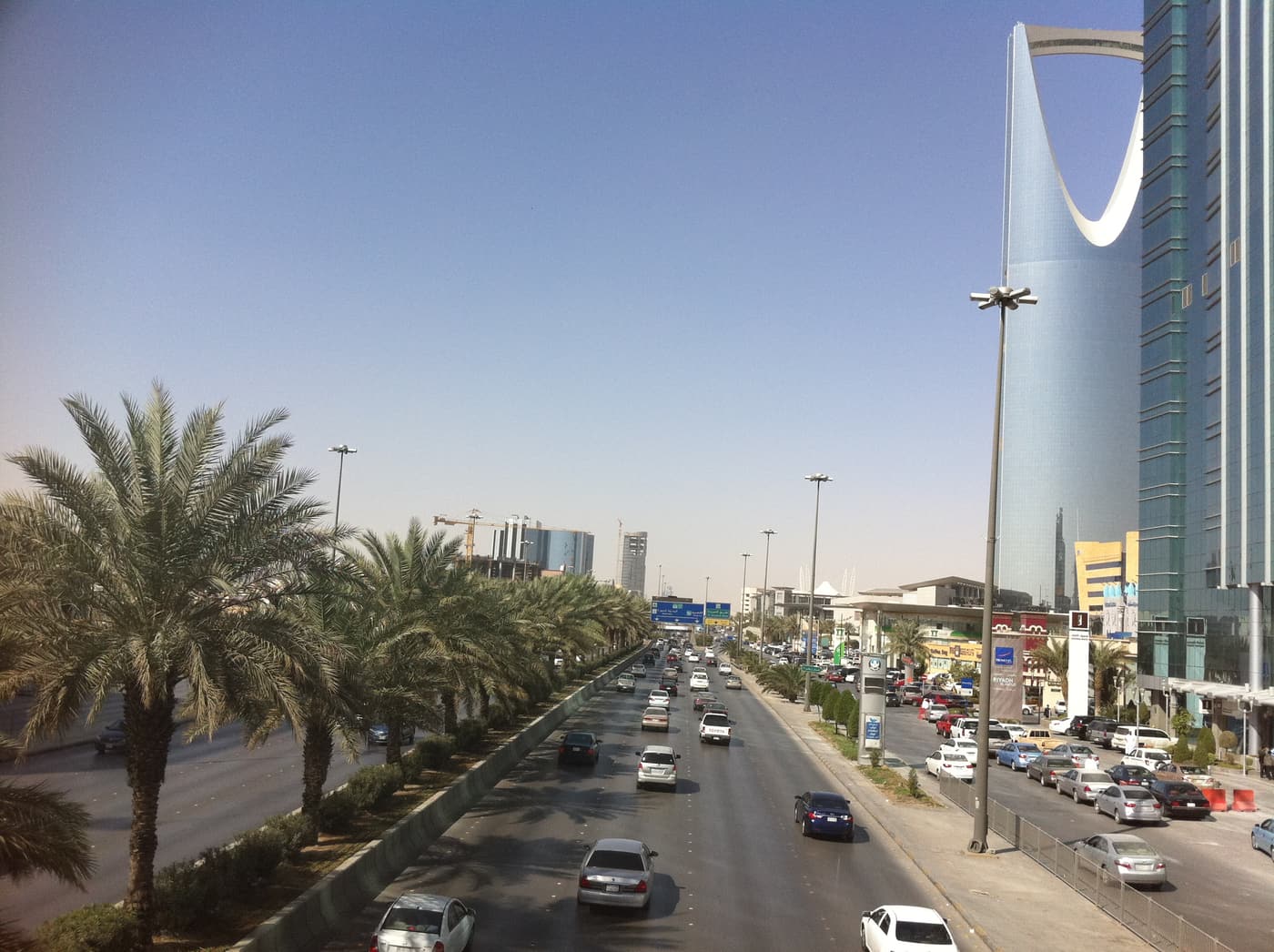
The tower with the hole in it is Riyadh’s emblem. A steel sky bridge spans the gap at the top, roughly 300 metres above Olaya, with views over the whole grid of the city. Nearby stands Al Faisaliah, the pointed tower with a golden globe near its tip.
 Modern Riyadh
King Abdullah Financial District (KAFD)
Riyadh’s cluster of crystalline towers
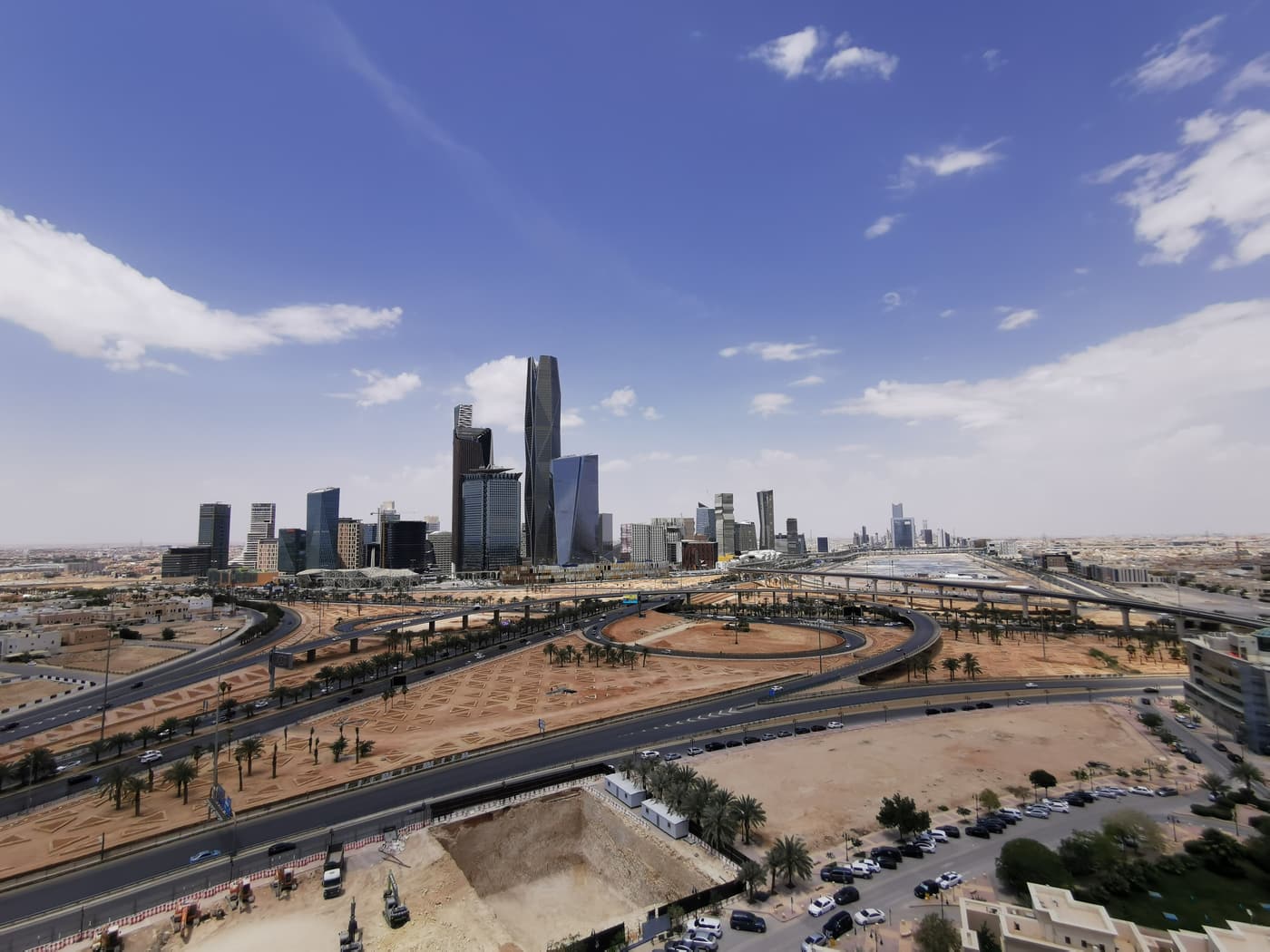
A dense, walkable district of angular glass towers in the north of the city, linked by shaded walkways and air-conditioned skybridges. Come for the architecture, the futuristic metro station and the restaurants and cafés at street level.
 Modern Riyadh
Boulevard City & Riyadh Season
The city’s winter festival grounds
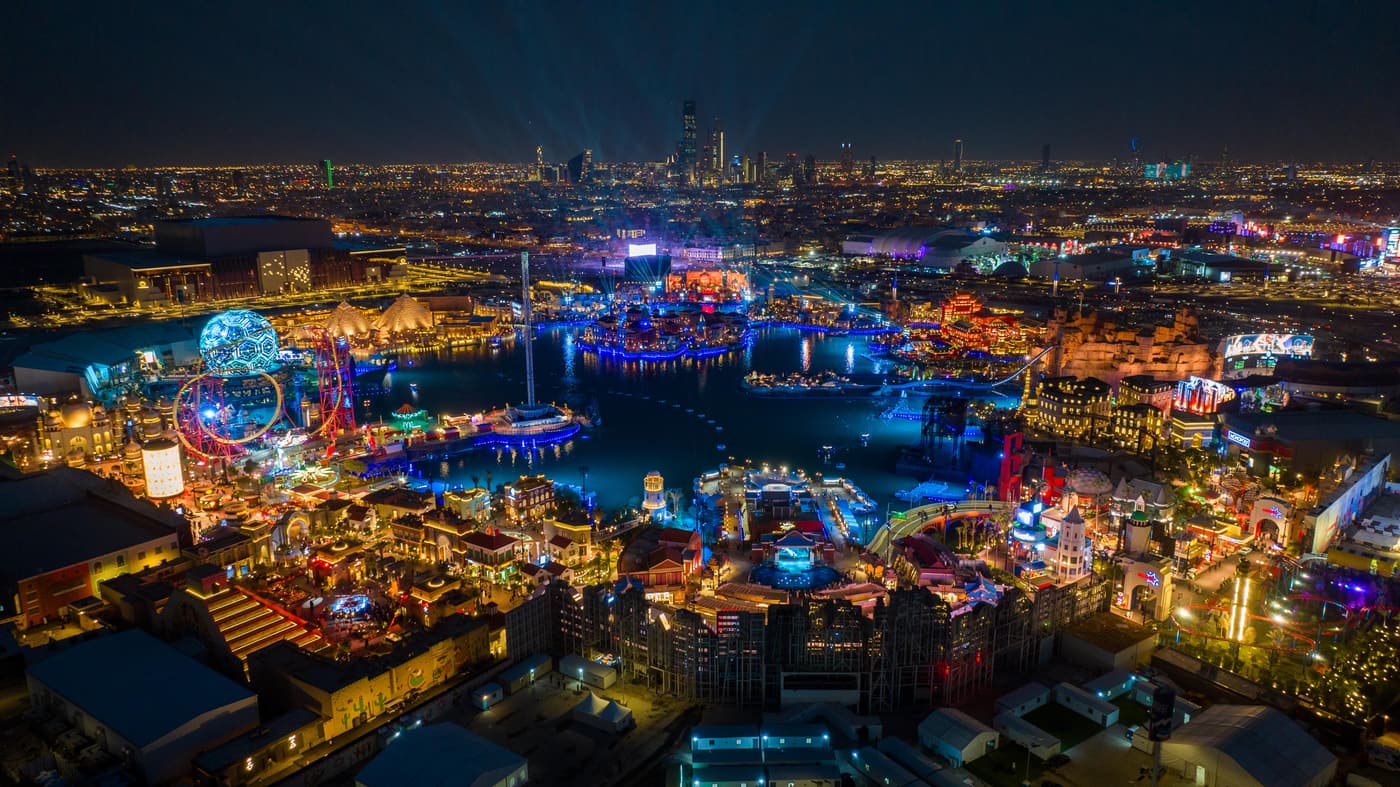
From roughly October to March, Riyadh Season turns the north-west of the city into an entertainment district. Boulevard City has restaurants, theatres, arenas and giant screens; next door, Boulevard World packs miniature versions of countries around a lagoon.
 Modern Riyadh
Wadi Hanifah
The green valley on the city’s western edge
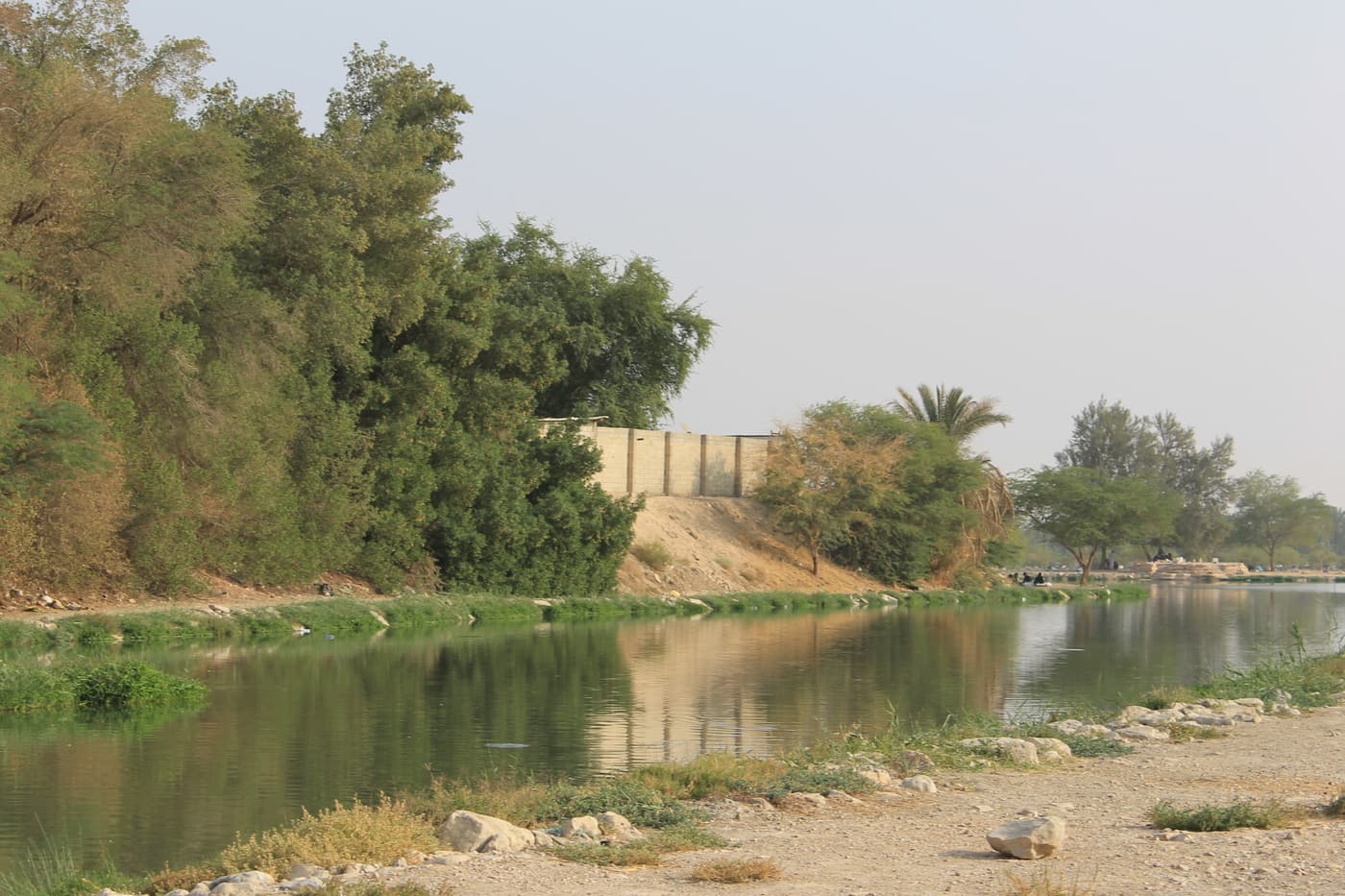
The valley that gave Riyadh its water and its palm groves runs for well over a hundred kilometres along the west of the city. Restored stretches now have lakes, picnic lawns and walking paths, and at sunset on a winter weekend half of Riyadh seems to be here.
Desert & day trips
 Desert & day trips
Edge of the World (Jebel Fihrayn)
A 300-metre cliff over an ancient seabed
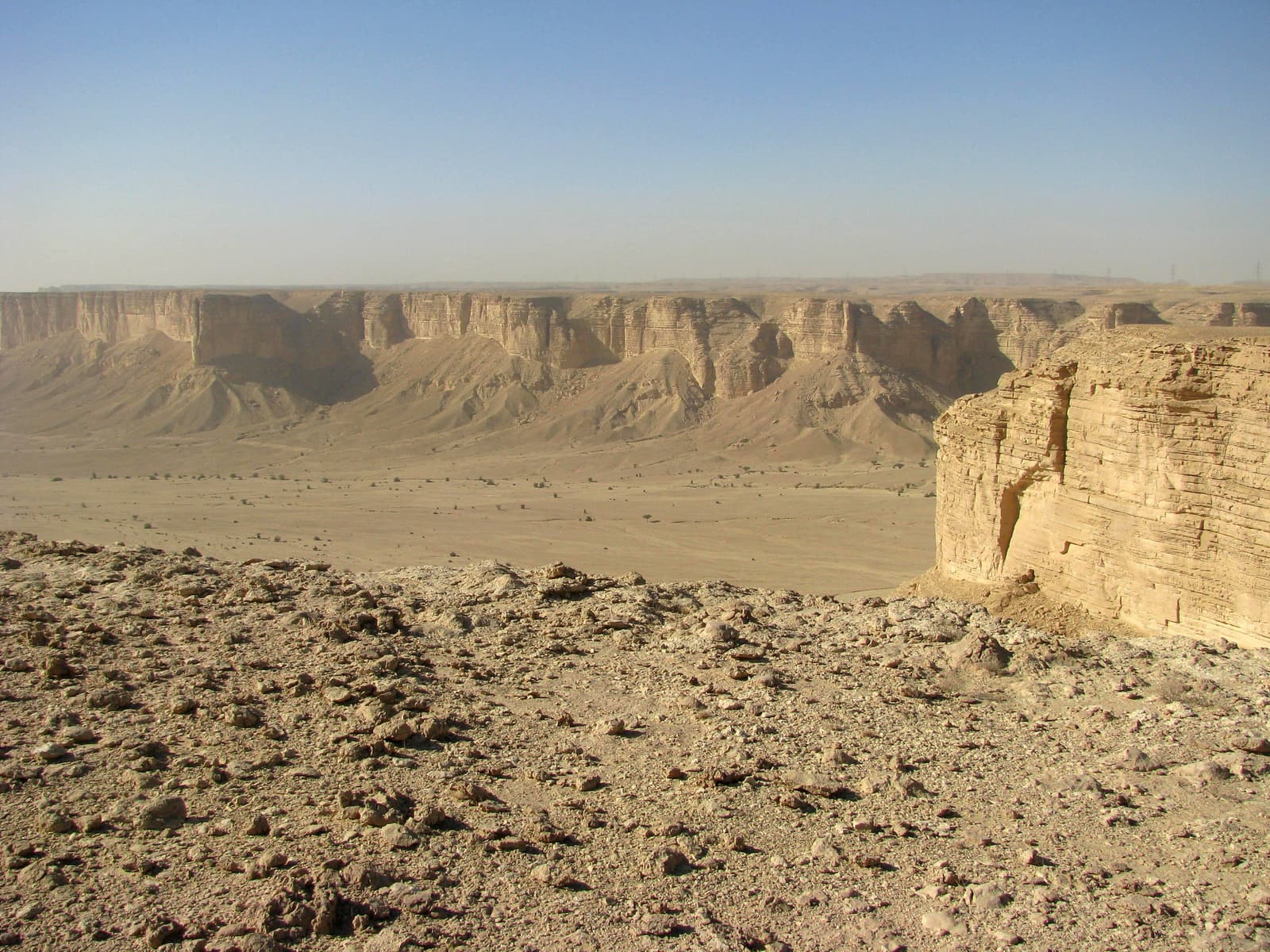
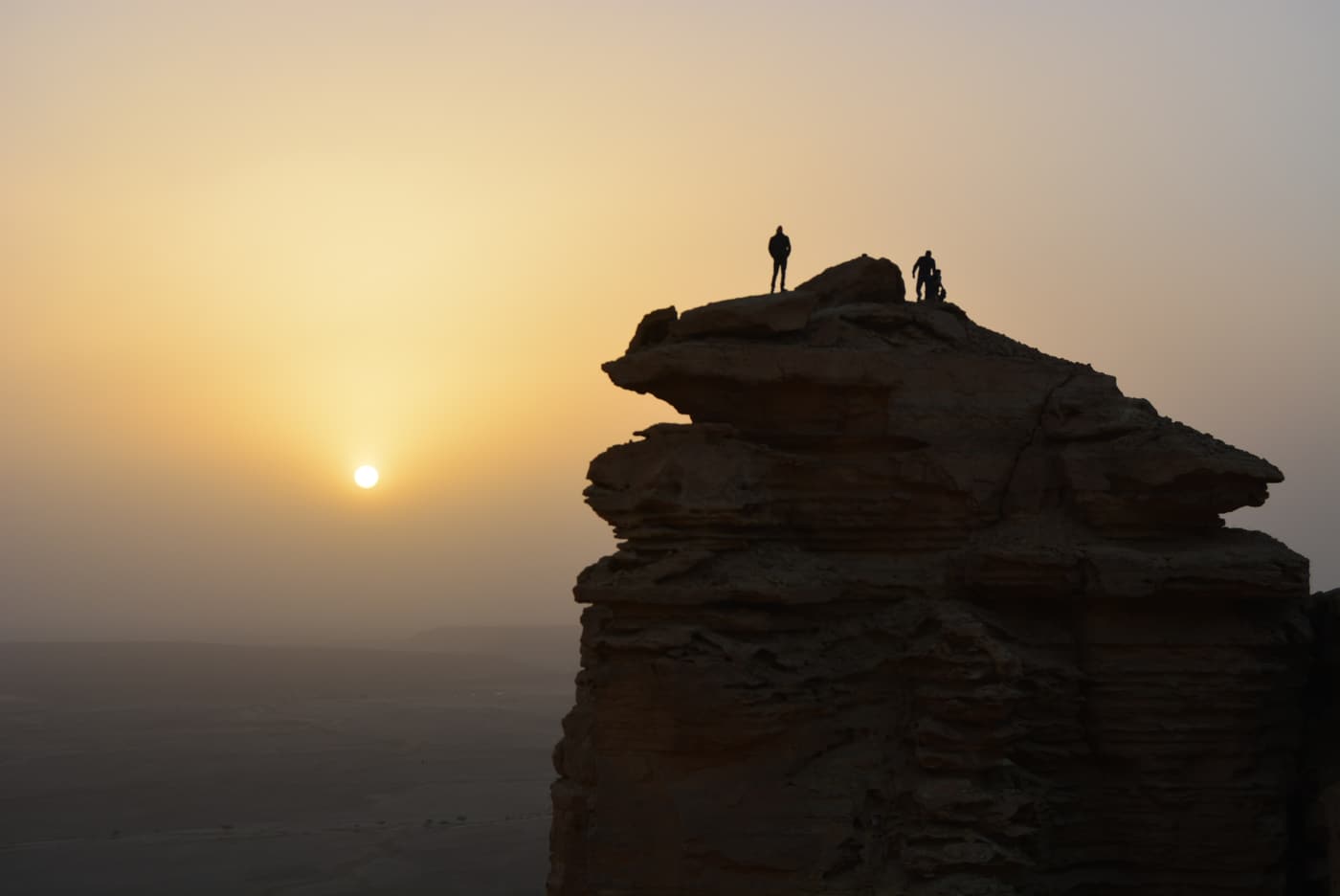
North-west of Riyadh, the Tuwaiq escarpment ends in sheer cliffs that drop to a plain stretching to the horizon. It is the great day trip from the capital — but the last stretch is a rough off-road track that needs a proper 4x4, and access rules and gate times change.
 Desert & day trips
Red Sand Dunes
Quad bikes and sunsets an hour from town
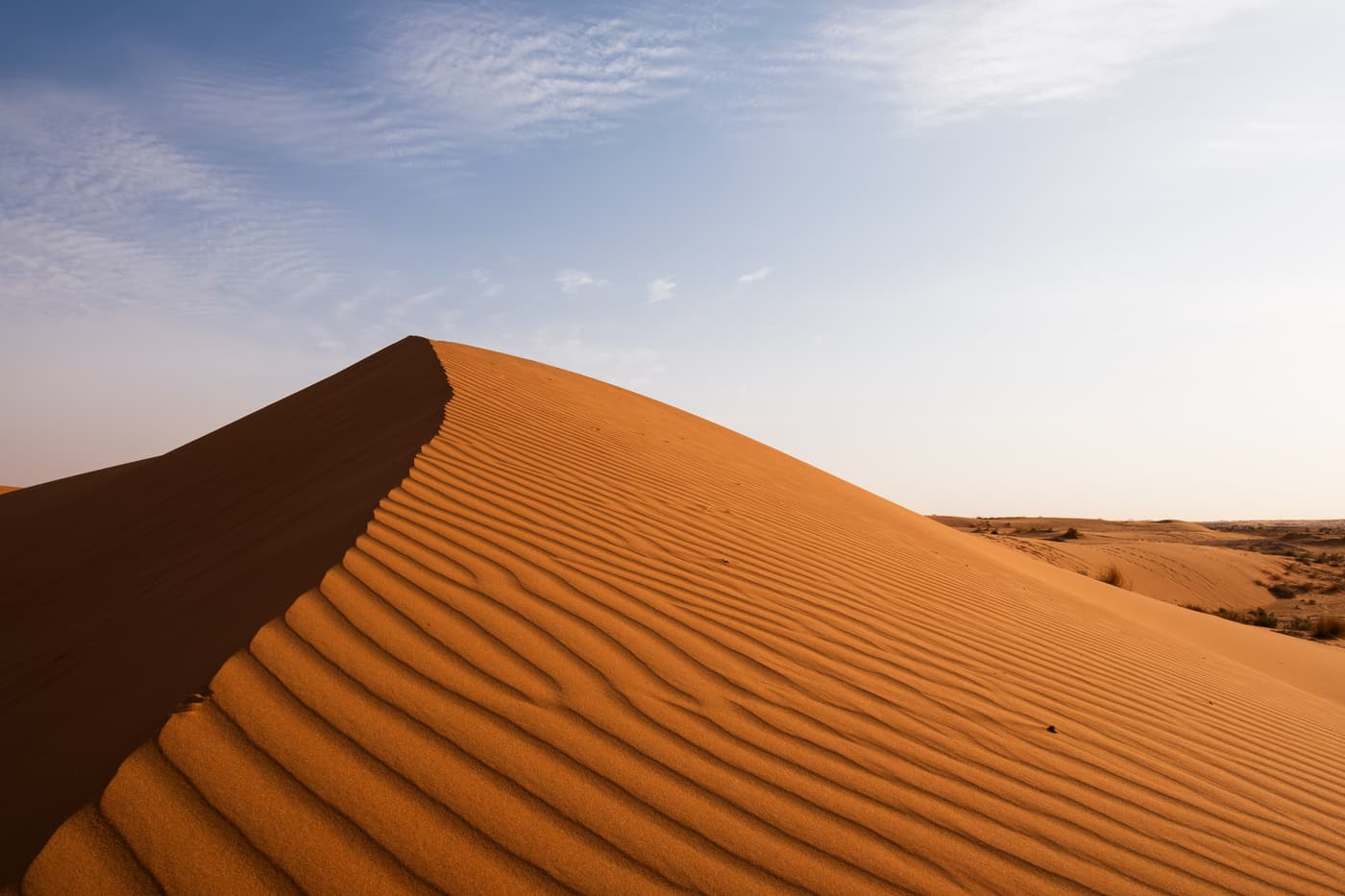
The rust-red dunes off the Makkah road, west of the city, are Riyadh’s desert playground: quad bikes for hire, camel rides, sandboarding and a soft, warm sunset. An easy half-day even without a 4x4.
 Desert & day trips
Heet Cave (Ain Heet)
An underground lake at the foot of a cliff
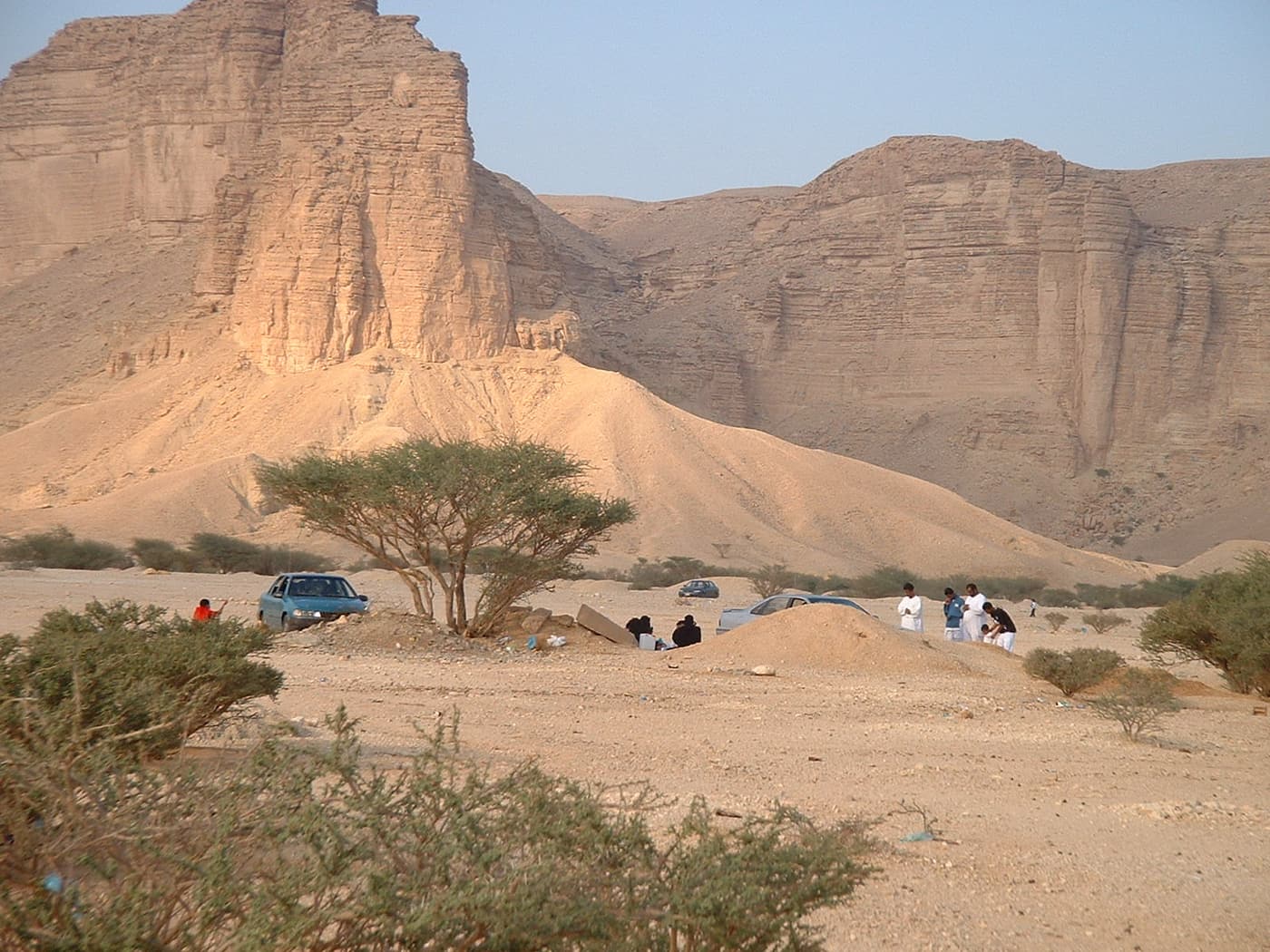
South-east of Riyadh, a wide cave mouth at the base of a limestone hill leads steeply down to a pool of clear groundwater. It is an adventurous, undeveloped spot: a rough scramble, no facilities and a water level that rises and falls.
 Desert & day trips
Ushaiqer & Shaqra Heritage Villages
A day among the mud-brick towns of the Najd
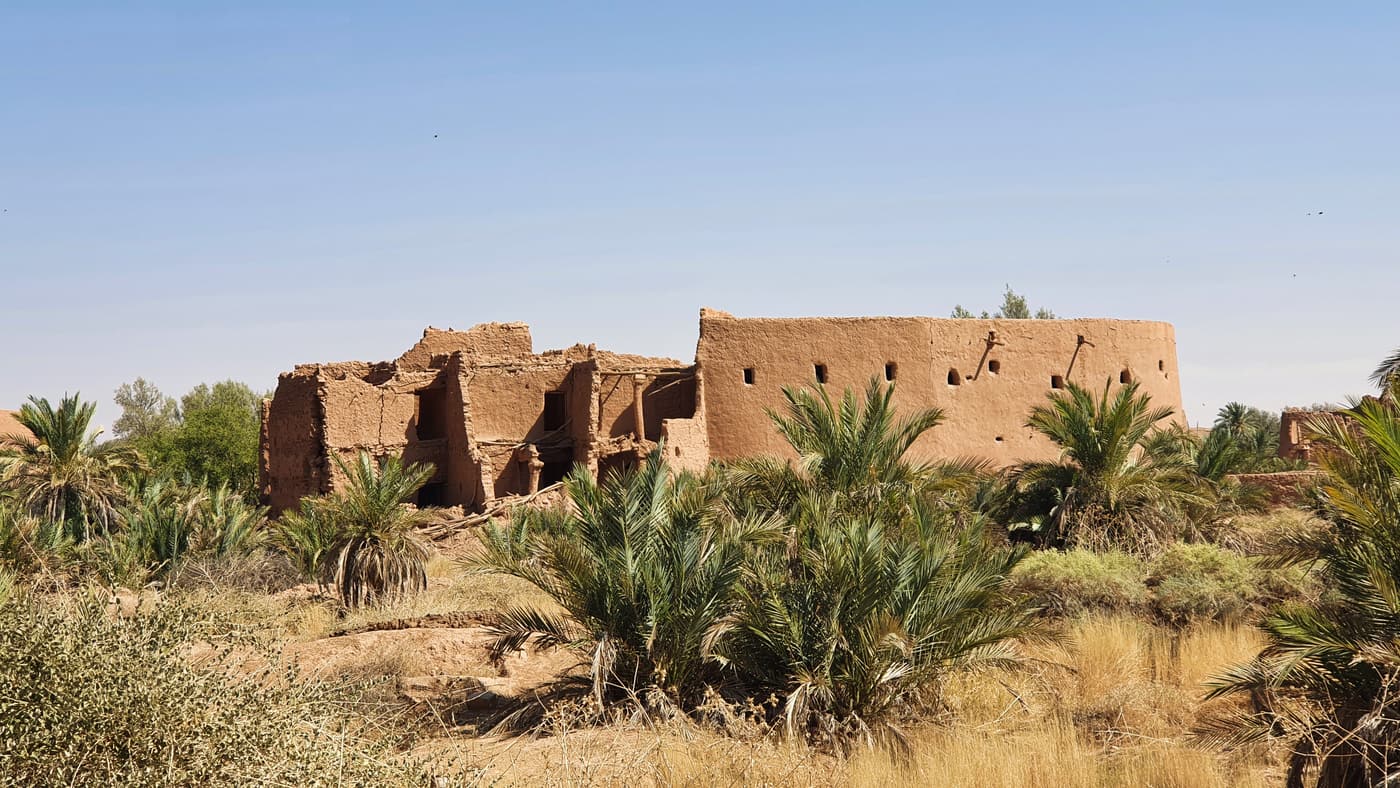
Around two hours north-west of Riyadh, Ushaiqer is one of the best-preserved traditional villages in central Arabia: a maze of mud-brick lanes, carved wooden doors, old mosques and palm gardens. Nearby Shaqra has its own restored old town and souq.
 Desert & day trips
Qiddiya City
Theme-park thrills below the Tuwaiq cliffs
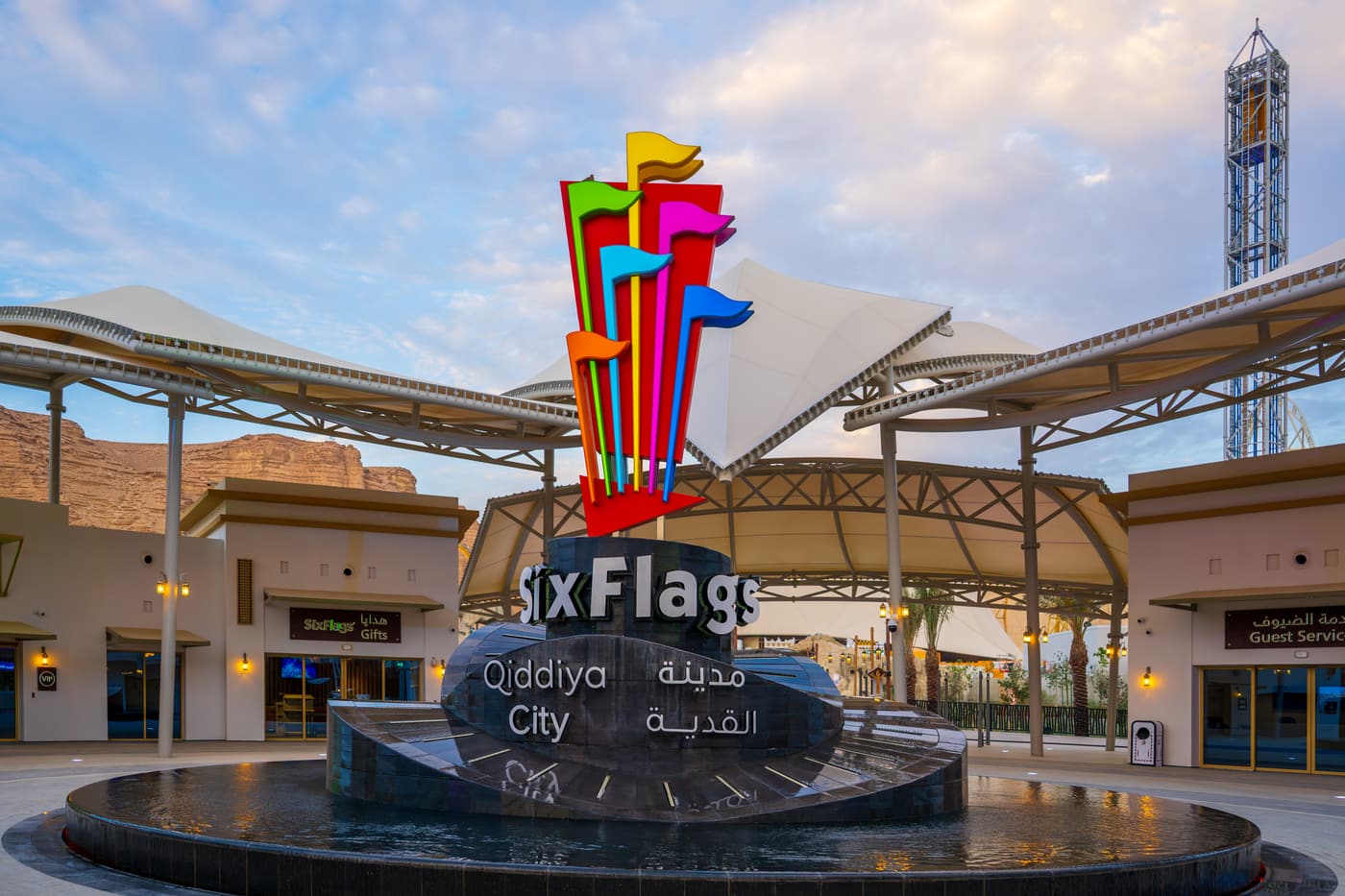
A huge entertainment project is taking shape on the escarpment south-west of Riyadh. Its first big attraction, Six Flags Qiddiya City, is open, with a water park, Aquarabia, alongside it. Much of the rest is still being built.
A sensible three-day plan: Day one, the National Museum and Murabba Palace in the heat of the day, then Masmak Fortress and Souq Al Zal from late afternoon. Day two, the Sky Bridge or KAFD in the morning, and Diriyah from mid-afternoon into the evening. Day three, a quiet morning, then the Edge of the World or the Red Sand Dunes for sunset. With a fourth day, choose between Ushaiqer, Qiddiya and — in season — an evening at Boulevard City.
More places worth knowing
- The Diplomatic Quarter (DQ): a leafy, landscaped district of embassies on the edge of Wadi Hanifah, with walking trails, gardens, cafés and the striking Tuwaiq Palace. Entry is through security checkpoints; carry your passport.
- JAX district: converted warehouses in Diriyah that house artists’ studios, galleries and the Diriyah Contemporary Art Biennale.
- Via Riyadh and The Zone: upscale open-air complexes for shopping, cinema and dining, the first in Najdi-inspired stone next to the St. Regis, the second in the north of the city.
- King Abdullah Park and Salam Park: city parks with lakes and evening fountains — King Abdullah Park in Al Malaz, Salam Park near the old centre.
- Riyadh Zoo: the long-established zoo in Al Malaz has been operated as a Riyadh Season zone in recent years; check whether it is open on your dates.
- The Camel Trail: an old caravan path cut into the Tuwaiq escarpment south-west of the city, now a popular short winter hike with wide views.
Live availability
Book Riyadh tours & activities
Real-time prices and availability straight from GetYourGuide. Free cancellation on most experiences.
Plan your days in Riyadh
Mud-brick palaces, glass towers and a cliff at the edge of the desert
Riyadh pairs the birthplace of the Saudi state with one of the great desert viewpoints of Arabia. Compare city tours, Diriyah visits and 4x4 desert trips and book in a couple of taps.